630-462-9500
After Hour New Client Telephone Number 630-690-6077
1776 S. Naperville Road, Building B, Suite 202,
Wheaton, IL 60189

-

- Home
- Firm Overview
- Attorneys
- Practice Areas
- Divorce
- What To Expect During Your Divorce
- How To Choose A Divorce Attorney
- Divorce Planning
- Protecting Your Credit During Divorce
- Settlement Vs. Trial
- Alimony / Maintenance
- Unallocated Alimony
- Taxes and Divorce
- Distribution of Marital Property
- Dissipation of Assets
- Retirement Plans, IRAs And QDROs
- International & Interstate Divorce
- Post Divorce Modifications & Enforcement
- Divorce FAQs
- High Net Worth Divorce
- Child Custody
- Child Support
- Collaborative Law
- Mediation
- Family Law
- Appeals
- Criminal Representation
- Divorce
- Testimonials
- Media
- Blog
- Contact

Can I Sue a Mistress or Paramour for Causing My Divorce?
 Ending a marriage is often an emotionally difficult experience, but it can be especially hurtful when a divorce was caused by infidelity. If you find your spouse cheating, you may struggle to trust future partners. You may also feel that your ex-spouse's mistress or paramour caused you significant harm.
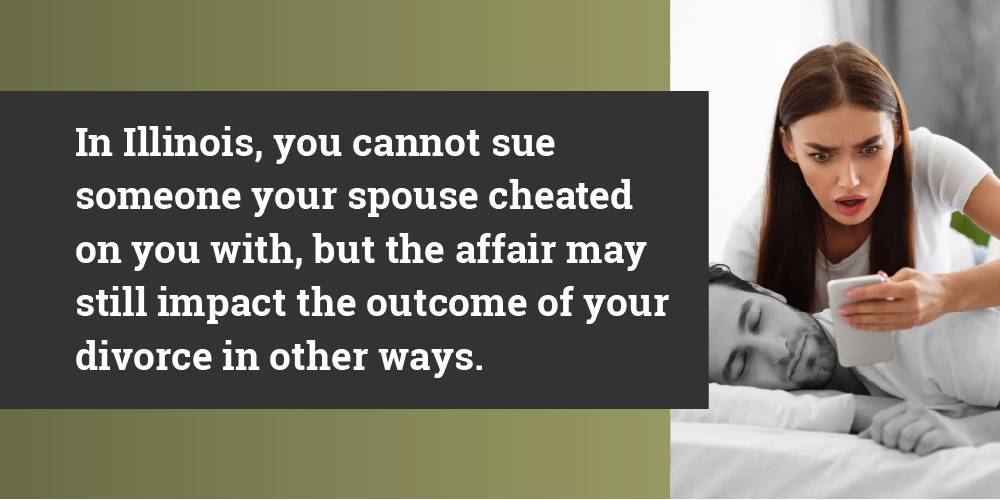
In some states, a person can file a civil tort claim for criminal conversation or alienation of affection. In this type of case, someone can sue the person who broke up their marriage, asking the judge to award damages based on loss of consortium, mental anguish, and loss of support. However, under Illinois law, you can’t take legal action against a mistress or paramour just for cheating. At The Stogsdill Law Firm, P.C., our DuPage County, IL divorce attorneys can help you navigate an emotionally charged divorce and pursue a fair resolution.
What Are "Heart Balm" Torts in Illinois?
In the past, some states allowed lawsuits based on romantic betrayal. These cases were often called "heart balm" torts. Two of the most well-known were alienation of affection and criminal conversation. Alienation of affection claimed that a third party destroyed a marriage. Criminal conversation focused on adultery itself.
Illinois no longer allows these types of lawsuits, as the state abolished heart balm torts in 2016. That means you generally cannot sue a mistress or paramour simply for having an affair with your spouse. Even if the relationship caused deep emotional pain or directly led to the breakdown of the marriage, Illinois courts will not hear those claims. The reason is tied to public policy. Illinois follows a no-fault divorce system. The court does not assign blame for why a marriage ended. Instead, the focus stays on dissolving the marriage fairly. Judges avoid turning divorce cases into moral trials about who behaved worse. This can feel deeply unfair to someone who was betrayed. Many spouses feel that a third party should be held responsible. Illinois law, however, draws a firm line.
Divorce is treated as a private family matter, not a basis for punishing outsiders through civil lawsuits. While you may not sue a paramour for causing the divorce, that does not mean infidelity is completely irrelevant. It can still affect certain practical issues in a case, depending on how it intersects with finances or parenting.
How Does Adultery Affect a Divorce?
In general, marital misconduct is not a factor that is considered when awarding spousal maintenance or dividing marital property. However, if a person dissipated or wasted marital assets during the course of an extramarital affair, they may be required to reimburse the marital estate for these assets.
One other thing to note is that under Illinois law, adultery is technically a criminal offense. If a person has sexual intercourse with someone other than their spouse, and the behavior is "open and notorious," they can be charged with a Class A misdemeanor, which can be punished by up to $2,500 in fines and up to one year in jail (720 ILCS 5/11-35). However, enforcement of this law is extremely rare. Illinois courts do not treat adultery as a basis for divorce or automatic penalties in family law cases.
Does Infidelity Affect Child Custody?
Infidelity alone does not decide child custody in Illinois. The court’s guiding question is always: "What serves the child’s best interests?" Judges focus on stability, safety, and the child’s emotional and physical well-being.
A parent is not punished for cheating when custody is decided. Affairs happen between adults. The court generally sees them as separate from parenting ability. A faithful spouse does not automatically gain an advantage. An unfaithful spouse does not automatically lose parenting time.
That said, the details can be important. Infidelity can become relevant if it directly affects the child. For example, problems may arise if a parent exposed the child to unsafe situations. Bringing strangers around the child repeatedly can raise concerns. The court may also look at a parent’s judgment. If the affair involved risky behavior, criminal activity, or emotional harm to the child, it can be considered in the final custody order.
In most cases, custody decisions focus on daily life. Judges look at who takes the child to school, who handles doctor appointments, and who provides steady routines. When it comes to parenting, those everyday realities matter far more than who caused the marriage to end.
Do You Have to Pay Alimony to a Spouse Living With an Affair Partner?
Alimony, called maintenance in Illinois, is designed to address financial imbalance after divorce. Fault, including adultery, is usually not part of that analysis. However, cohabitation can change things. If a spouse receiving maintenance moves in with a new romantic partner, the paying spouse may have options.
Illinois law allows maintenance to be reduced or terminated if the recipient is in a supportive relationship. To determine whether or not cohabitation exists, courts look at the nature of the relationship. They consider whether the couple shares expenses. They look at how long the arrangement has lasted and examine whether the relationship functions like a marriage. The fact that the partner was involved in the affair does not control the outcome. What matters is the present financial reality. If the receiving spouse now has support similar to a spouse, ongoing maintenance may no longer be appropriate. These cases are often fact-specific. Proving cohabitation usually requires evidence. That can include shared bills, mail, photos, or testimony.
If you think that your spouse is cohabitating with a new partner, we can help you document evidence to back up your claim. While you cannot sue a mistress or paramour for ending your marriage, the law does provide tools to address unfair financial outcomes. Understanding where the law draws its lines can help you make informed decisions as you move forward.
Contact a Wheaton, IL Divorce Lawyer
If your marriage has ended because of adultery, you may not be able to sue your spouse's mistress or lover, but you should still take steps to protect your rights during your divorce. At The Stogsdill Law Firm, P.C., we can help you understand your options and work with you to address the legal issues involved in legally dissolving your marriage. Contact a DuPage County, IL family law attorney at 630-462-9500 to schedule a consultation today.












Contact Us To Schedule A Consultation With An Attorney At Our Firm
Call 630-462-9500 or provide your contact information below and we will get in touch with you:
The Stogsdill Law Firm, P.C.
1776 S. Naperville Road, Building B, Suite 202Wheaton, IL 60189630-462-9500