630-462-9500
After Hour New Client Telephone Number 630-690-6077
1776 S. Naperville Road, Building B, Suite 202,
Wheaton, IL 60189

-

- Home
- Firm Overview
- Attorneys
- Practice Areas
- Divorce
- What To Expect During Your Divorce
- How To Choose A Divorce Attorney
- Divorce Planning
- Protecting Your Credit During Divorce
- Settlement Vs. Trial
- Alimony / Maintenance
- Unallocated Alimony
- Taxes and Divorce
- Distribution of Marital Property
- Dissipation of Assets
- Retirement Plans, IRAs And QDROs
- International & Interstate Divorce
- Post Divorce Modifications & Enforcement
- Divorce FAQs
- High Net Worth Divorce
- Child Custody
- Child Support
- Collaborative Law
- Mediation
- Family Law
- Appeals
- Criminal Representation
- Divorce
- Testimonials
- Media
- Blog
- Contact

Can I Obtain Exclusive Possession of the Marital Home During My Divorce?
 When couples divorce, one of the most important questions is simple yet difficult: Who stays in the house? Sometimes, both spouses want to stay. Other times, one spouse refuses to leave, even when doing so would make the process easier and safer for everyone. Deciding who can live in the home during divorce can be one of the hardest issues to resolve. This is doubly true if there is domestic abuse involved.
In Illinois, you may be allowed to stay in your home without your spouse by using certain legal options. These include an Order of Protection or a Motion for Exclusive Possession of the Marital Residence. These court orders exist to keep you and your children safe while your divorce is in progress.
If you are dealing with this situation, an experienced Wheaton, IL divorce lawyer can explain your rights, guide you through the process, and help make sure your home stays a safe and stable place during your case.
Orders of Protection for Victims of Domestic Violence
No one should be forced to live in fear in their own home in 2025. If your spouse is physically violent or threatens you, you may be able to get an Order of Protection, commonly referred to as a restraining order.
Under 750 ILCS 60/214, an Order of Protection can require a spouse to move out of your home and stay out of it. The Order can also require this person not to harass you or your children, to give their guns to the police, and to stay a certain distance away from you and the kids. Orders of protection can also require the abusive spouse to continue paying household expenses.
To get an Order of Protection, you will generally need to show that your spouse has:
-
Physically abused or threatened to harm you or another family member
-
Harassed you, such as by stalking, showing up at your job, or calling you over and over
-
Interfered with your personal liberty through intimidation or control
-
Intimidated a dependent, such as harming or threatening a child to control you
-
Willfully deprived you or your dependents of food, medicine, or necessary care
You can request an emergency order. These can be granted immediately and last up to 21 days. A longer plenary order can last up to two years, but it requires a full court hearing. If your spouse does not follow the terms of the order, they can be arrested and charged with a crime.
Motion for Exclusive Possession of the Marital Home
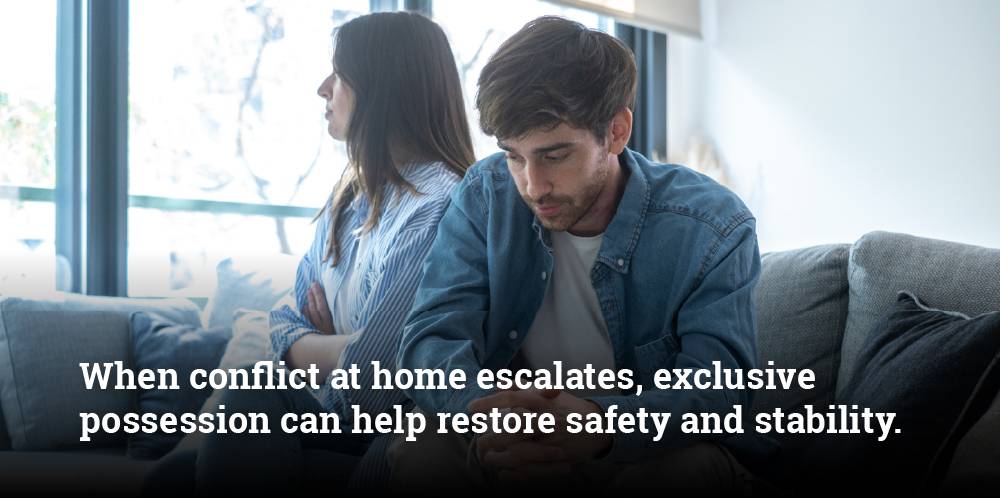
Even when there is no abuse, living together during a divorce can be very hard. Constant arguing affects everyone in the house and can make children feel anxious or unsafe. Illinois law gives one spouse the option to ask the court for exclusive possession of the home.
This motion is a legal order that lets one spouse stay in the marital home while the divorce is still going on. It also requires the other spouse to move out temporarily. To get this order, you must show that living together would harm your physical or emotional well-being or that of your child. The court looks for more than just stress or discomfort; it needs to see real risk of emotional or physical harm.
When reviewing your request, the judge may look at things like how much you fight with your spouse and what that fighting looks like. Similarly, the court will want to know whether there is a history of threats, controlling behavior, or aggression. If so, the court will look at how this affects the children and what is in their best interests.
If the judge grants your motion, your spouse will have to move out right away or by a set date. This order is only temporary. It does not decide who will own the home once the divorce is finalized. That issue is handled later during property division.
Difference Between Exclusive Possession and an Order of Protection
These two options sound similar but serve different purposes. An Order of Protection is used when there is abuse or harassment. It can also include stay-away rules, custody terms, and firearm restrictions.
A Motion for Exclusive Possession is for situations where there is conflict or tension but not necessarily abuse. It helps create space and calm while the divorce is pending.
Both are legal court orders, and not following them can have serious consequences. A family law attorney can help you decide which option fits your situation.
What to Do Before Asking for Exclusive Possession of Your Marital Home
If living together has become unhealthy or unsafe, there are steps you should take before going to court:
-
Document incidents: Keep notes of threats, fights, or any police involvement.
-
Avoid confrontation: If you feel unsafe, leave the home and call the police. Your and your children’s safety comes first.
-
Talk to an attorney early: A lawyer can explain whether you qualify for exclusive possession or if an Order of Protection would be better.
-
Look for financial documents: Mortgage statements, pay stubs, and utility bills may be needed in court to show who pays for what.
Make a backup plan: Be ready with a place to stay if the court does not grant your request right away.
What Happens After Exclusive Possession Is Granted During a Divorce?
Once a judge grants exclusive possession, the spouse ordered to leave must get out of the house by the date in the order. The police can help if necessary.
The order will remain in effect until the divorce is finalized or the order is changed for some other reason. During that time, the court may issue other orders requiring one spouse to help pay for the mortgage, rent, or household bills.
It is important to understand that exclusive possession does not determine who ultimately keeps the house. That decision comes later, based on factors such as each spouse’s financial situation, contributions to the home, and the best interests of the children.
Call Our DuPage County, IL Divorce Lawyers
If you are going through a divorce and need to stay in your home, you need a good lawyer. At The Stogsdill Law Firm, P.C., our experienced Wheaton, IL family law attorneys help clients safeguard their rights during every stage of divorce. We will explain your options so you can make smart decisions that get you where you need to go.
Call 630-462-9500 today to schedule a confidential consultation and learn how we can help you protect your family.












Contact Us To Schedule A Consultation With An Attorney At Our Firm
Call 630-462-9500 or provide your contact information below and we will get in touch with you:
The Stogsdill Law Firm, P.C.
1776 S. Naperville Road, Building B, Suite 202Wheaton, IL 60189630-462-9500